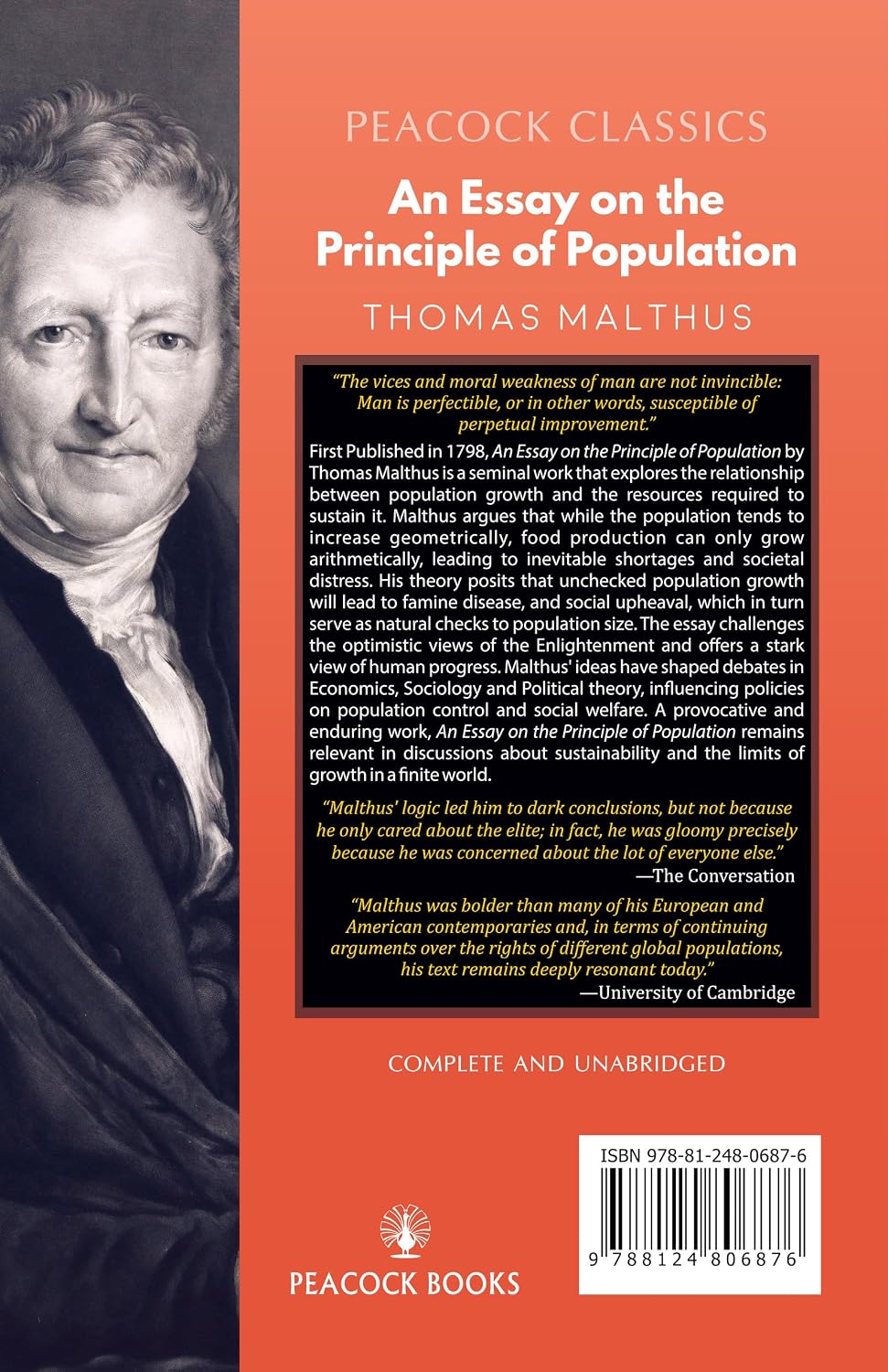
“The vices and moral weakness of man are not invincible: Man is perfectible, or in other words, susceptible of perpetual improvement.”
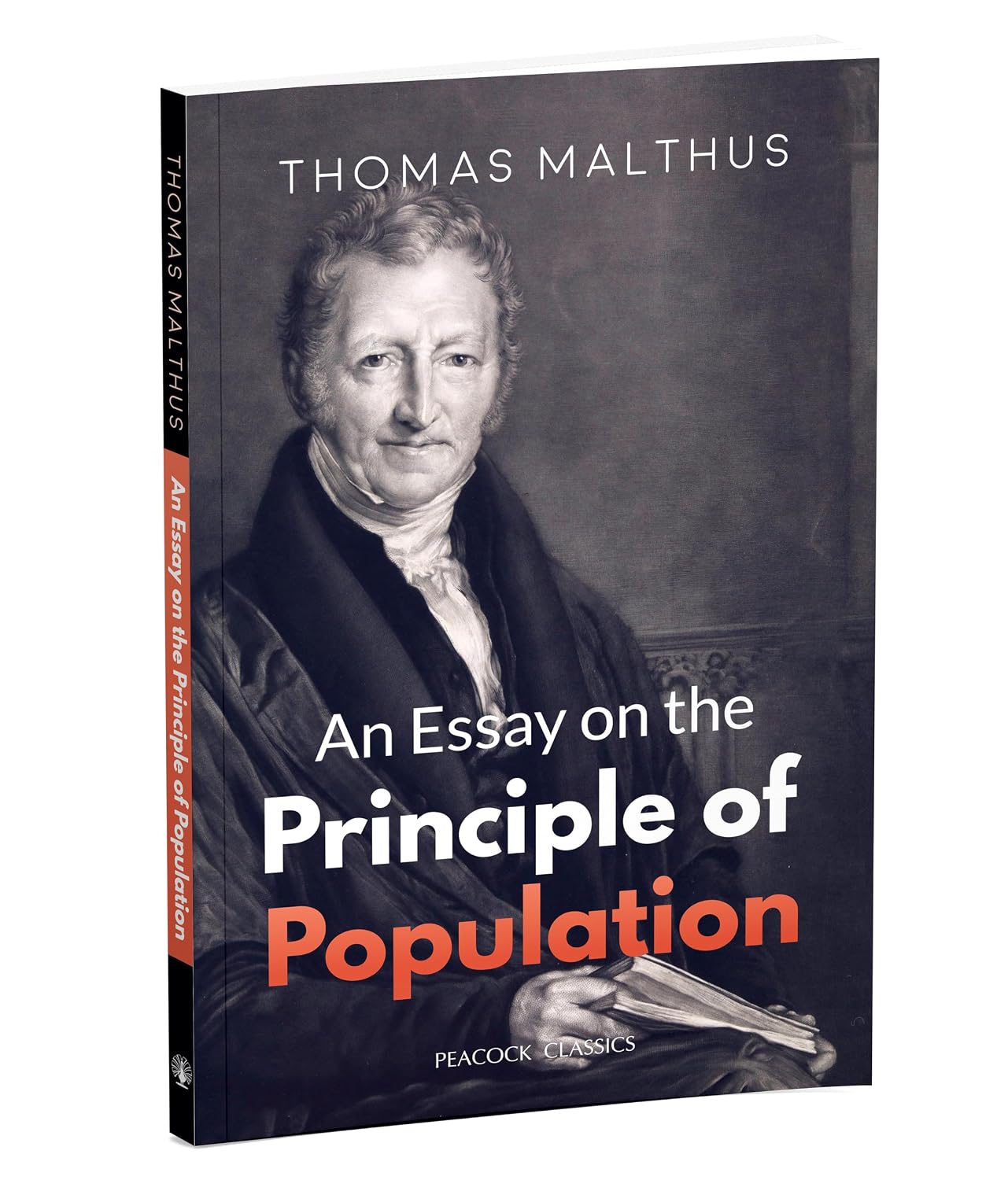
First Published in 1798, An Essay on the Principle of Population by Thomas Malthus is a seminal work that explores the relationship between population growth and the resources required to sustain it. Malthus argues that while the population tends to increase geometrically, food production can only grow arithmetically, leading to inevitable shortages and societal distress. His theory posits that unchecked population growth will lead to famine disease, and social upheaval, which in turn serve as natural checks to population size. The essay challenges the optimistic views of the Enlightenment and offers a stark view of human progress. Malthus' ideas have shaped debates in Economics, Sociology and Political theory, influencing policies on population control and social welfare. A provocative and enduring work, An Essay on the Principle of Population remains relevant in discussions about sustainability and the limits of growth in a finite world.